How to set up and tune an electric bass

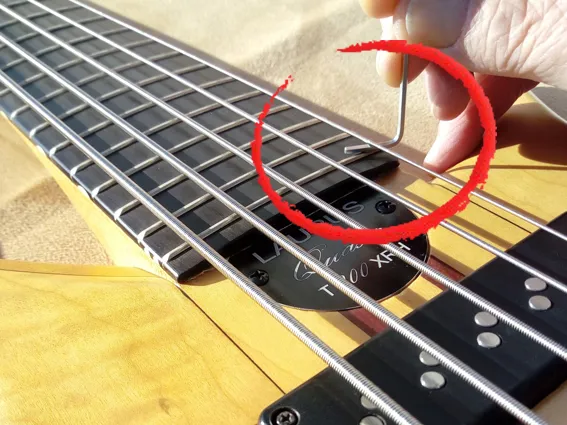
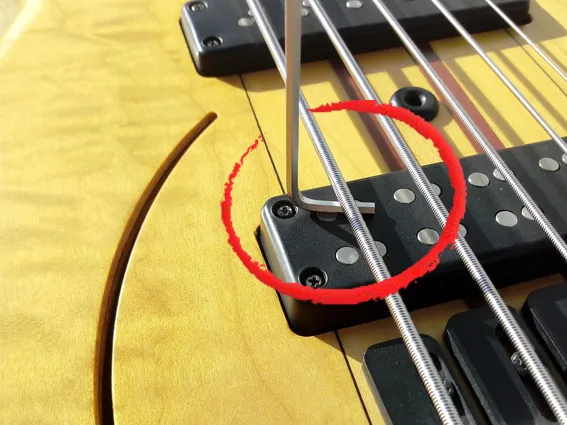
After ensuring that the neck is straight by 95–98% by adjusting the truss rod, the string height is set at the last fret of the fingerboard, leaving a gap of about 2 mm between the top of the fret and the string (on the lower strings, like B and E, this gap can be slightly larger).
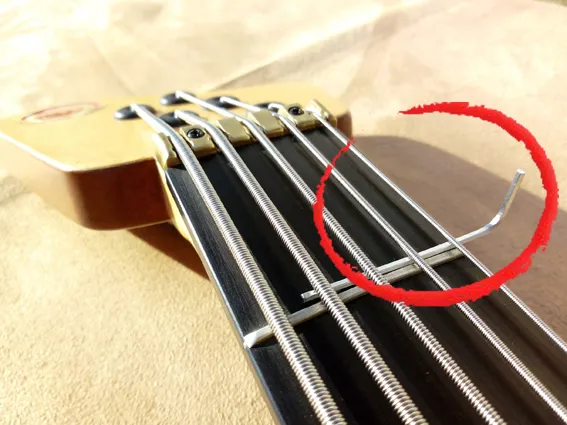
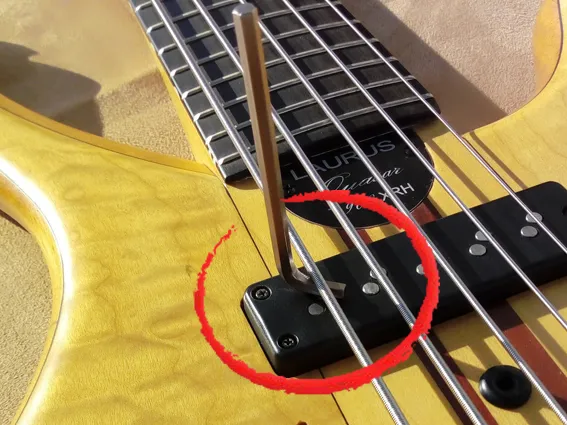
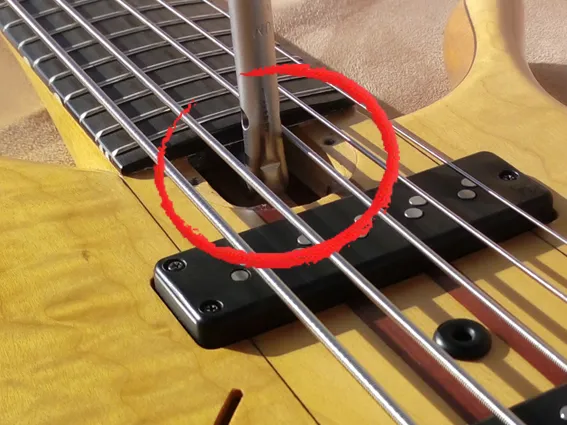
At the nut, the string height should match the height set at the frets. You can use simple Allen wrenches as gauges. As mentioned, about 2 mm between the top of the last fret and the string. The E and B strings can have slightly more clearance. The action (string height along the fingerboard) depends not only on the musical style but also on the strength of the player’s fretting hand.
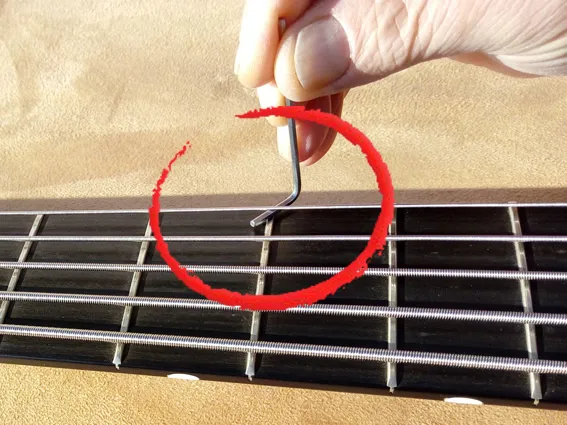
A string under higher tension will have fewer problems buzzing against the frets. For musical styles like Jazz/Fusion with many solos, thinner (softer) strings are sometimes used to allow greater expression with the right hand (or left for left-handed players). To measure the correct height at the nut (toward the fingerboard), place a 1.5 mm Allen wrench on the fingerboard (touching the wood) next to the 1st fret on the side facing the nut. All strings should just touch the wrench.
This assumes the fret height is 1 mm, since the nut is always set about 0.5 mm higher than the frets. Laurus basses come with detailed instructions and photos so that anyone can keep their instrument properly adjusted.
Typically, a 4-string bass is tuned, from the lowest string, to E – A – D – G at 440 Hz.
A 5-string bass usually adds a low B below the E, and a 6-string bass also includes a higher string, typically a C above the standard G.
Experienced musicians may choose to customize their tuning to achieve different tonal colors.
When using an electronic tuner, it is recommended to play each string at the 12th fret harmonic (while muting the other strings if possible) so the tuner receives the most precise pitch.
It is highly recommended to train your ear by using the tuner only on the first string (e.g., G), then checking the harmonics: the 7th fret harmonic on one string should match the 5th fret harmonic of the next lower string. For example, the 7th fret harmonic on the G string should match the 5th fret harmonic on the D string, and so on.